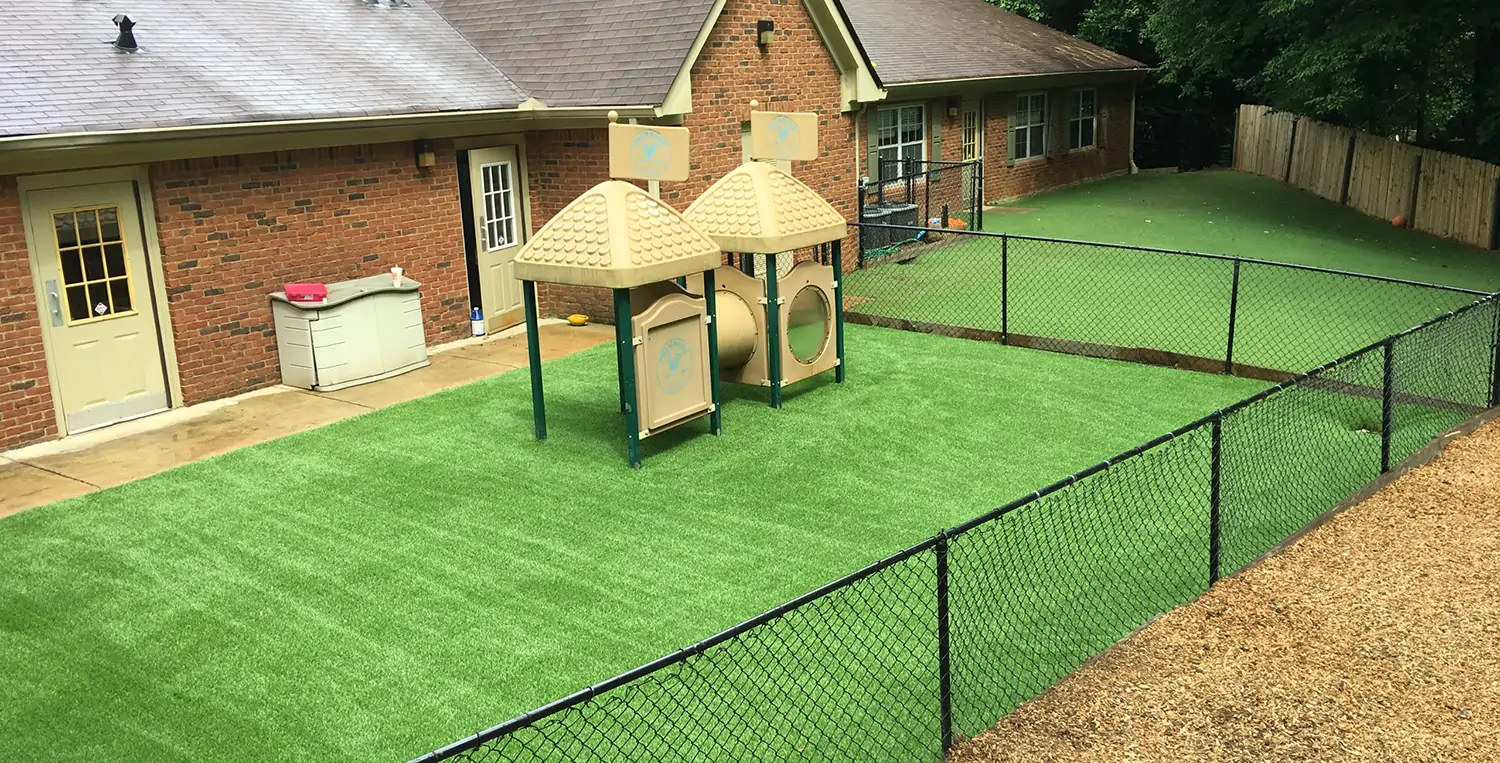
Pet turf in the upper Texas coast environment fails faster than pet turf in drier climates for two specific reasons: the persistent coastal humidity creates conditions that accelerate bacterial growth in untreated infill, and the drainage demand from a pet yard — particularly from large dogs or multi-dog households — pushes standard backing drainage capacity to its limits during the summer rainy season when pet traffic is heaviest and rain events are most frequent.
The bacterial growth issue is not cosmetic — it is the source of the odor problem that homeowners call us to diagnose in failing pet turf installations. Standard SBR infill without antimicrobial treatment is effectively a growth medium for the anaerobic bacteria that produce hydrogen sulfide and other odor compounds in a humid, organically loaded environment. The bacterial colonies establish themselves in the infill within a few months of heavy pet use in a high-humidity environment. Once established, they cannot be eliminated by surface rinsing — the colonies are too deep in the infill matrix for topical treatment to reach them.
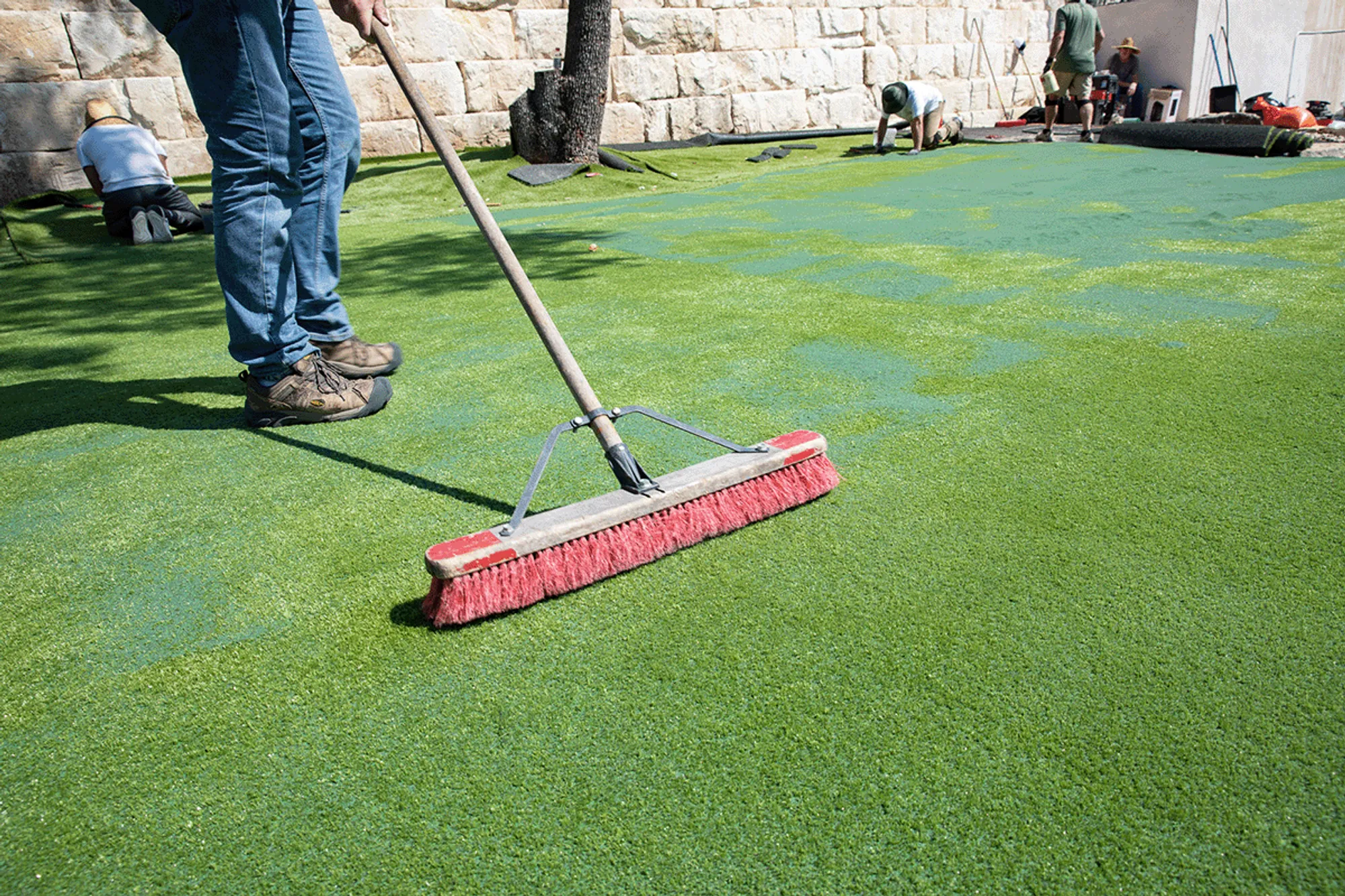
The preventive solution is an antimicrobial-treated infill product applied at installation. The antimicrobial treatment is integrated into the infill particle during manufacturing, not sprayed on after the fact. This treatment eliminates the bacterial growth environment for the first several years of the installation's life. Periodic re-treatment is available as the original treatment loses effectiveness over time, but a properly installed system with antimicrobial infill from the start significantly extends the odor-free service life of the installation.
For drainage, pet turf backing needs to be rated at the high end of the drainage capacity range — 25 to 30 inches per hour at minimum for a yard with multiple dogs. Standard backing products are rated lower than this and create ponding conditions under the simultaneous load of pet use and summer rain events. The drainage backing selection is a critical specification that affects both surface hygiene and base longevity. Water that cannot drain through the backing quickly collects at the base of the fiber pile, maintains the moisture level that bacterial colonies require, and — if the lot drainage is inadequate — can accumulate under the surface and degrade the base aggregate over time.